The Steady State curriculum
Twelve weeks in three phases, one per pillar. Short lessons and one action a week.
You always know the one thing to work on this week.
The 12-week type 1 program
The 12-week type 1 program from the scientist who lives it.

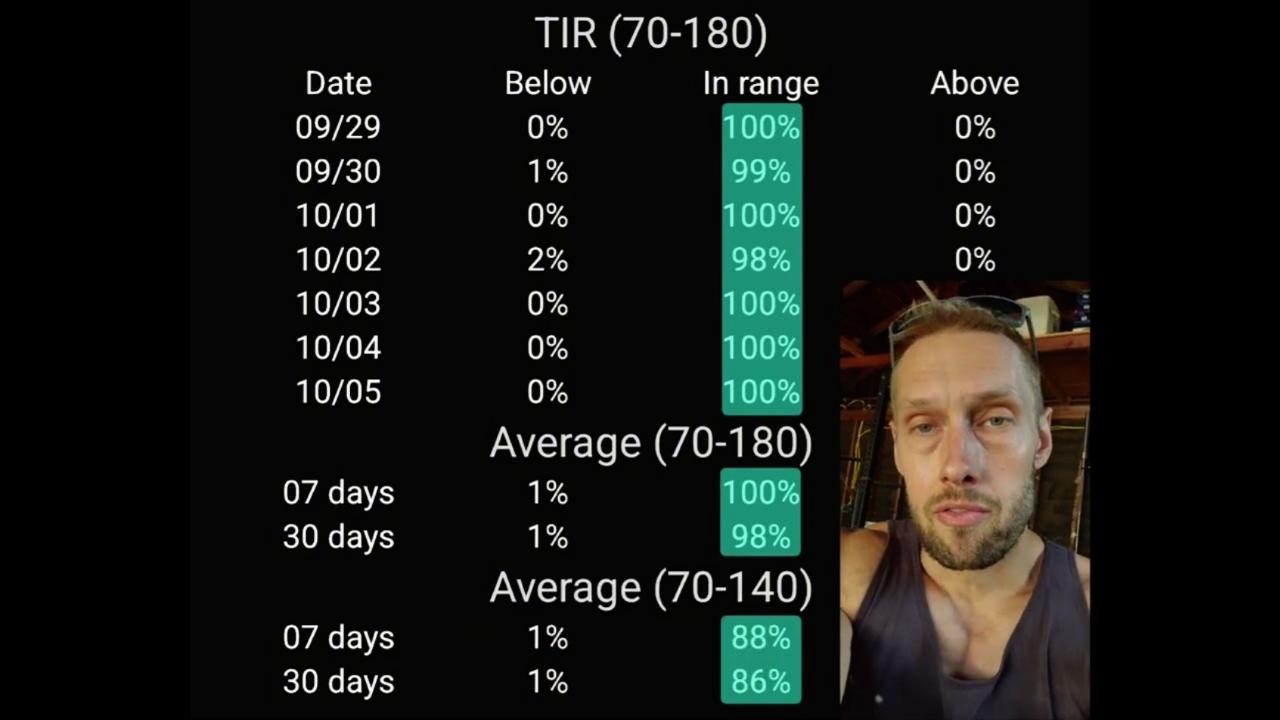
My own CGM
Sound familiar?
You count every carb and dose on time, and you still spike after meals, chase it down and crash.
You were told to eat whatever you want and cover it with insulin.
The lows come at night, and part of you dreads going to sleep.
Your endo looks at your A1c and nothing else.
It was never your discipline, your pump settings or your endo. It was the size of the inputs.
The mechanism
Smaller inputs, smaller mistakes.
Big carb loads need big doses, and every big dose carries a big error that no pump can fully catch. Lower the load and the doses shrink, the errors shrink and the line flattens. Carry less insulin and you also stop feeding the insulin resistance I call double diabetes.
Big load
A big carb load needs a big dose.
Spikes high, then drops low
Low load
A Low-Load meal needs a small dose.
Stays in range
The curriculum
Weeks 1 to 4
01The Low-Load plate
Smaller inputs mean smaller doses, and smaller doses mean smaller mistakes.
What you'll seeFlatter curves after meals, and your total daily insulin coming down.
Weeks 5 to 8
02Dosing for real food
Why your number rises three hours after dinner, and the timing that fixes it.
What you'll seeA flat line overnight, no 3 AM climb, and fewer correction doses.
Weeks 9 to 12
03Training without the crash
Built from my work with elite athletes, scaled to a normal week.
What you'll seeA hard workout without a low, and your time in range up on the 14-day report.
What's inside
Twelve weeks in three phases, one per pillar. Short lessons and one action a week.
You always know the one thing to work on this week.
Ninety minutes. I teach one thing and review members' CGM graphs live. Every call is recorded.
You see the fixes made on real graphs, every week.
A certified diabetes educator reviews your CGM data every week and answers your questions in between.
Someone looks at your numbers every week, not once a quarter.
The unfair advantage · Done for you
04From your first 14 days of CGM data, my team builds your starting meal map, a dosing worksheet to take to your care team, and a one-page Endo Brief with the research behind it.
You start from a plan built on your own numbers, ready to show your endo.
Plus three bonuses
Bonus 1
Breakfasts, lunches, dinners and restaurant orders, each with the swap.
You're never stuck on what to eat.
Bonus 2
The rules for sick days and trips, written down before you need them.
A cold or a flight doesn't undo your week.
Bonus 3
The Steady State members, plus every live call on replay.
Help between calls, from people who live with it too.
How it runs
One short lesson and the one action for your week.
Your coach goes through your week on the CGM and answers your questions.
Ninety minutes with me. I teach one thing and review graphs live.
Questions, meals and small wins in between, with people who get it.
Then again next week, for 12 weeks.
What it asks of you each week
The proof
Last 30 days
98%time in range on my own CGM
HbA1c
5.5%held around there for more than 10 years
Insulin
43%less insulin since I lowered the load

The scientist side
On the record
TEDxUSF
Rethinking nutrition for type 1, from the patient and the researcher.
Ten years of data
My own ten years of low-carb with type 1, what the numbers show.
The guarantee
Do the work for 12 weeks (wear your CGM, follow the plan, show up or watch the weekly call) and if your time in range hasn't improved, we keep coaching you free until it has.
Dr. Andrew Koutnik, PhD
The investment
$3,000 to $5,000
with payment plans
Your exact plan and price are set on a call with my team.
40 people per cohort, because a coach reviews every member's CGM data every week.
Five quick questions, then you pick a time with my team.
Questions
Usually it's because the carbs got cut and the dosing didn't change. Protein and fat push you up hours later, the number climbs after dinner, and the diet gets the blame. Phase two is built for exactly that: how to dose for protein and fat so the late climbs stop. And you'll see it on your own CGM, day by day, not three months later on an A1c.
It's one short lesson and one action a week. Your coach goes through your CGM data with you, so you're not decoding graphs on your own, and the call is recorded if you can't make it live. Your plan is built for you from your first 14 days of data, so you don't start from a blank page.
Because I live it and I study it. I've had type 1 since I was 16, and my own CGM shows 98% time in range over my last 30 days. I've also spent my career on the science: 100+ peer-reviewed publications, co-author of the first international guidelines on carb reduction in type 1, and research with NASA, Harvard and Johns Hopkins. My own case is in the scientific literature.
Because every year in poor control adds up, and the rollercoaster doesn't change on its own. Cohorts are also capped at 40, since a coach reviews every member's CGM data every week. Once a cohort's full, you wait for the next one.
No. You change nothing without your doctor. Everything in Steady State runs alongside your care team, and that's why the Endo Brief exists: a one-page summary with the research behind it, so your endo can see what you're doing and why.
Yes, whether you're on pens, a pump or an automated system like Omnipod 5 or Control-IQ. No pump or algorithm can fully catch a big dose error, so smaller inputs help whichever one you use.